



If you’re an HVAC contractor who relies on organic search leads, the morning of March 27, 2026, might have felt like a cold front hitting a broken furnace. You checked your analytics, and the steady stream of traffic you’ve enjoyed for years suddenly took a dive.
At ServMark Digital Marketing Agency, we’ve seen this play out before, but the March 2026 Core Update is different. It’s the most aggressive move Google has ever made against "thin" local content. If your website is built on dozens: or hundreds: of templated geographic landing pages where the only difference is the city name, you aren't just losing rankings; you’re losing your digital footprint.
But here is the good news: this isn't the end of local SEO. It is simply a shift toward quality. In this guide, I’m going to show you exactly how to pivot so you can dominate your competition and reclaim your spot at the top of the search results.
Why the "Old Way" of HVAC SEO Is Failing
For years, the standard "SEO recipe" for HVAC companies was simple: create a "service area" page, copy the content, and use a tool to swap "Dallas" for "Plano," "Frisco," and "Arlington." It worked because Google’s algorithm was looking for keywords and proximity.
In 2026, the game has changed. The March update focuses heavily on E-E-A-T (Experience, Expertise, Authoritativeness, and Trustworthiness). Google’s AI now understands that if the content on your "AC Repair in Miami" page is identical to your "AC Repair in Fort Lauderdale" page, you aren't providing unique value to the residents of either city.
The Penalty for "Thin" Content
Google now categorizes these templated pages as "thin content." When the algorithm sees a pattern of repetitive, low-effort pages, it doesn't just de-rank those pages: it can pull down the authority of your entire domain. This is why many contractors are seeing their main homepages drop alongside their geo-pages.
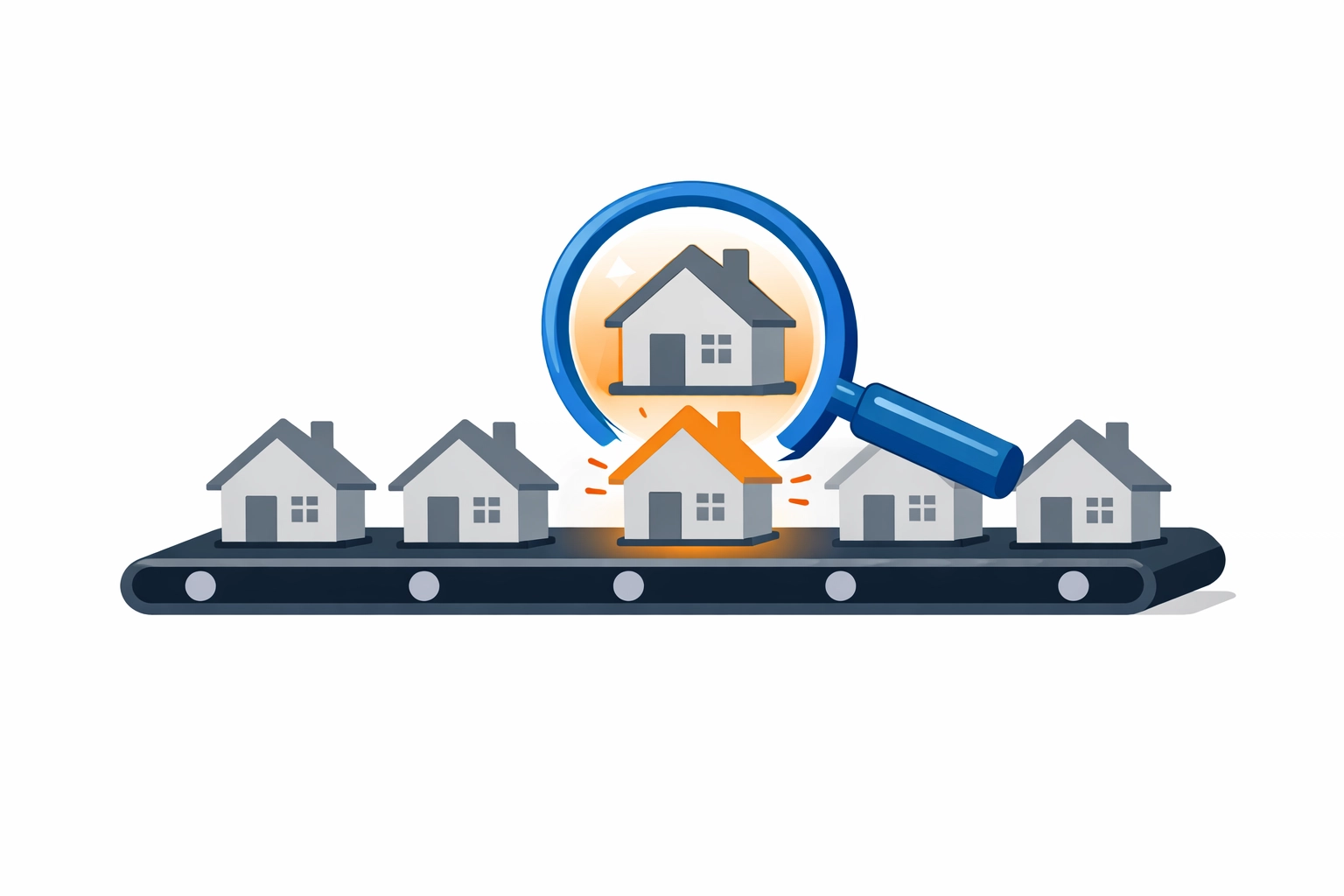
Survival Step 1: Quality Over Quantity (The Consolidation Strategy)
The first step to surviving the 2026 update is to stop the "page bloat." If you have 50 pages for 50 tiny suburbs, and none of them have unique content, you are a target.
We recommend a Consolidation Strategy. Instead of having 50 weak pages, focus on 5 to 10 "Power Pages" for your primary markets.
What makes a Power Page?
- Unique Local Context: Mention specific neighborhoods, local landmarks, or common HVAC issues specific to that area (like salt-air corrosion in coastal towns or hard water issues in specific counties).
- Real Project Data: Instead of saying "We fix ACs," say "We recently replaced a 5-ton Carrier unit for a homeowner in the Highlands neighborhood."
- Verified Local Reviews: Embed Google Reviews specifically from customers in that exact city.
By focusing on depth rather than breadth, you signal to Google that you are a legitimate local authority. If you need help restructuring your site architecture, checking your page-sitemap.xml is a great place to start identifying which pages are redundant.
Survival Step 2: Showcase "Experience" (The Extra 'E' in E-E-A-T)
The "Experience" element of E-E-A-T is the biggest winner of the March 2026 update. Google wants to see proof that you have actually performed the work you claim to do.
For HVAC contractors, this means your geo-pages need to look less like a brochure and more like a portfolio.
How to Prove Experience:
- Original Photos: Stop using stock photos of smiling technicians who don't work for you. Upload real photos of your trucks, your team in uniform, and actual installation jobs.
- Technician Spotlights: Mention the specific technicians who service that area. "Lead Tech Mike has been servicing the Northside for 15 years."
- Local Climate Insights: Discuss how the current season’s weather is affecting local systems. This shows you are active and knowledgeable about the community's immediate needs.
This level of detail is exactly what we specialize in at ServMark Digital Marketing Agency. We help you transition from generic filler to high-converting, authoritative content that builds trust with both Google and your future customers.

Survival Step 3: Pivot to AEO (Answer Engine Optimization)
Search is moving beyond just a list of blue links. With the rise of AI-driven search results, you need to optimize for AEO (Answer Engine Optimization).
When a homeowner asks their phone, "Why is my AC making a clicking sound in [City Name]?" Google wants to pull an answer from a source it trusts. Templated pages rarely provide the specific, nuanced answers needed to win these "Answer Engine" spots.
By creating unique, helpful content: like "Top 5 Reasons Heat Pumps Fail in [Local Area] Winters": you position yourself to be the featured answer. This not only drives traffic but establishes you as the go-to expert before the customer even picks up the phone. You can learn more about our advanced approach to this at our AI, AEO, and Geo-Optimization page.
Survival Step 4: Technical Health and Transparency
While content is king, your technical foundation must be rock-solid. The March 2026 update also looks at how users interact with your site. If your templated pages load slowly or have a high bounce rate because they look "spammy," your rankings will suffer.
Make sure your website design is optimized for mobile users who are often searching for emergency repairs in a state of stress. They need a "Click to Call" button, a fast-loading page, and immediate proof that you are a licensed, insured professional.
"Working with ServMark changed everything for us. We were invisible in three of our biggest service areas. Within 90 days of implementing their local SEO framework, our lead volume tripled. They don't just do marketing; they understand our business." : John D., Owner of Elite Climate Control

Don’t Wait for the Next Update
The March 2026 Core Update was a wake-up call, but it’s also a massive opportunity. While your competitors are sitting around wondering why their leads dried up, you can take this time to rebuild your digital presence the right way.
You will absolutely be glad you did. By investing in high-quality, unique content and a professional SEO marketing strategy, you aren't just surviving an update: you’re building a moat around your business that no algorithm change can wash away.
Your 2026 HVAC SEO Checklist:
- Audit your current location pages for duplicate content.
- Delete or consolidate "thin" pages that offer no unique value.
- Replace stock photos with high-quality original images of your work.
- Add "Proof of Work" (case studies or project summaries) to every major service page.
- Ensure your reputation management is active and reviews are flowing in.
Let Us Handle It So You Don’t Have To Worry
At ServMark, we know you’re busy running a business, managing crews, and keeping your customers cool (or warm). You shouldn't have to spend your nights deciphering Google’s latest algorithm shifts.
We partner with you to level up your business, delivering the difference that professional, business-growth focused marketing provides. From PPC marketing to long-term SEO, we provide the transparency and results you deserve.
Ready to reclaim your rankings and grow your business?
Let’s get to work. Our team is ready to audit your site and build a custom strategy that turns Google’s updates into your competitive advantage.

Contact us today to schedule your consultation. Click here to see our services or learn more about the ServMark team.
Author: Drew Rigler CEO, ServMark Digital Marketing Agency
